Life is Sweet and Sour – Eid Mubarak
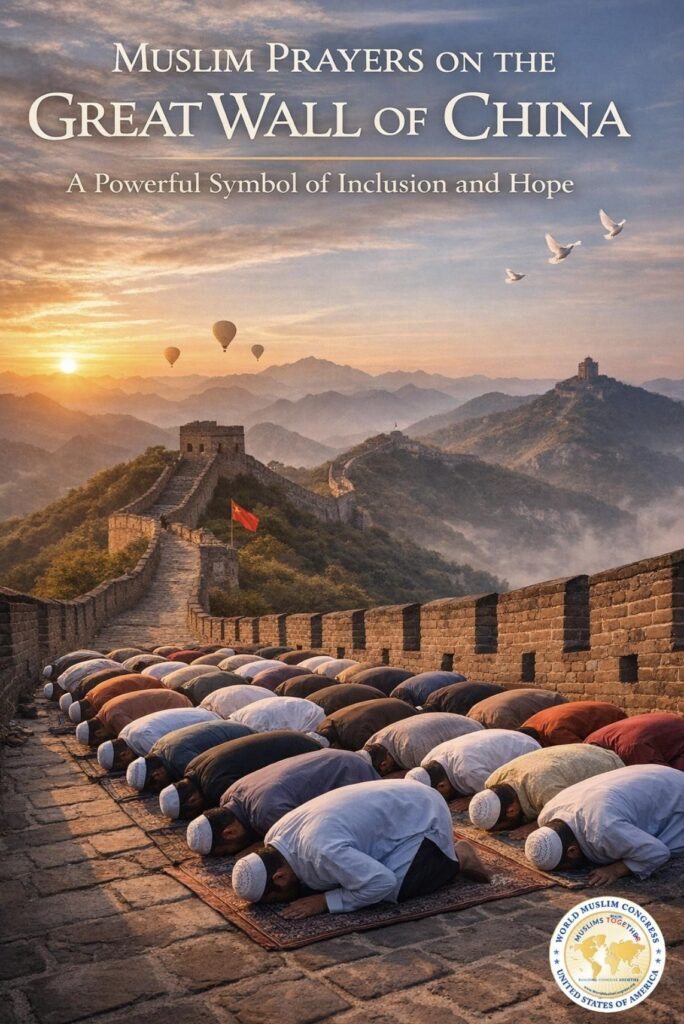
The emergence of Muslim prayers on the Great Wall of China has become one of the most unexpected and powerful moments of the year. During the sacred month of Ramadan, Taraweeh prayers being observed at such an iconic global landmark sends a strong message of unity, tolerance, and coexistence.
Two of the world’s most influential nations, China and Russia, appear to be moving—at least symbolically—toward more inclusive societies. By allowing visible expressions of faith at major landmarks, they contribute to a broader narrative: that diversity can exist alongside national identity.
A World Facing Tension and Division
We are living in a time marked by uncertainty and conflict. Communities such as Jews, Muslims, and Ukrainians are facing deep tensions and insecurities. Importantly, these challenges are not born from ordinary people—they are often the result of decisions made by those in power.
In such a climate, it becomes easy to blame one another or fall into cycles of resentment. But this only allows negativity to grow. Instead, we must take responsibility for our own mindset. Removing hatred and anger from our hearts is the first step toward meaningful peace.
Why Inner Peace Matters First
True peace doesn’t begin with governments—it begins within individuals. When we cultivate calmness, empathy, and understanding internally, we become better equipped to influence the world around us.
The message behind Muslim prayers on the Great Wall of China is not just religious—it is deeply human. It reminds us that despite differences, people everywhere share the same hopes: safety, dignity, and belonging.
The Reality of Coexistence
Once current global tensions begin to settle, humanity will still need to coexist. People will continue to:
- Travel across borders
- Study in shared institutions
- Work in diverse environments
- Build communities together
This is inevitable. So the real question is: what kind of world are we preparing for?
If we allow hatred to take root now, it will shape future generations. But if we actively choose understanding, we lay the foundation for lasting harmony.
A Call for Global Inclusion
The example of Muslim prayers on the Great Wall of China should inspire nations worldwide. Inclusion is not about numbers—it’s about mindset.
Even if there is only one person from a different religion, ethnicity, or background in a community, they deserve to feel valued and respected.
Countries such as:
- India
- United States
- Canada
- United Kingdom
- France
- Spain
—and every other nation—can benefit from embracing this principle.
Leadership and Responsibility
Leaders play a crucial role in shaping inclusive societies. When those in power prioritize unity over division, the impact is profound.
For example, regional leaders—such as Chief Ministers in various states—have the opportunity to:
- Promote harmony across communities
- Encourage religious tolerance
- Celebrate diversity rather than suppress it
Similarly, broader inclusion should extend to all groups, including communities like Falun Dafa practitioners, alongside Uyghur Muslims and others.
Inclusion Leads to National Strength
A nation thrives when its people feel safe and respected. Inclusion is not just a moral value—it is a strategic advantage.
When citizens feel secure:
- Productivity increases
- Social harmony improves
- Economic growth strengthens
- Innovation flourishes
Peace and prosperity are not separate goals—they are deeply connected.
The Power Within Individuals
Every individual holds the potential to contribute to a better society. Change does not always begin at the top—it often starts at the grassroots level.
Simple actions can make a difference:
- Practicing kindness
- Rejecting prejudice
- Supporting diverse communities
- Encouraging dialogue
When multiplied across millions, these actions create a powerful force for good.
Hope Beyond Accuracy
Even if some reports or videos about Muslim prayers on the Great Wall of China are not entirely accurate, the symbolism still matters.
Why?
Because hope itself is powerful.
It sets a vision for what the world could become—a place where differences are not feared but embraced.
Conclusion: Choosing Unity Over Division
The story of Muslim prayers on the Great Wall of China is more than a headline—it is a reminder.
A reminder that:
- Peace starts within
- Inclusion strengthens societies
- Diversity is not a threat, but an asset
As we move forward, let us choose understanding over judgment, compassion over conflict, and unity over division.
Eid Mubarak—may peace and harmony reach every corner of the world.
FAQs
1. What is the significance of Muslim prayers on the Great Wall of China?
It symbolizes inclusion, religious tolerance, and the possibility of peaceful coexistence in a diverse world.
2. Are Taraweeh prayers commonly held in public landmarks?
Not typically, which is why this event stands out as unique and impactful.
3. Why is inclusion important in modern societies?
Inclusion ensures social stability, economic growth, and overall well-being of citizens.
4. How can individuals promote peace in society?
By practicing empathy, rejecting hate, and supporting diversity in everyday interactions.
5. What role do leaders play in building inclusive societies?
Leaders set policies and cultural tone, influencing how communities treat one another.
6. Can symbolic events like this really make a difference?
Yes, symbols inspire change, shape narratives, and encourage positive action globally.
🌐 External Reference
Learn more about global inclusion efforts here:
https://www.un.org/en/global-issues/human-rights
About the Author
Dr. Ghouse is the President and founder of the Center for Pluralism and director of the World Muslim Congress. He is an Interfaith Wedding Officiant for InterfaithMarriages.org and a Muslim Wedding Officiant. He is a Muslim, Pluralist, activist, speaker, author, and social scientist. More on Google
Mike Ghouse